What if it Pours? Our “Plan B” Activities for Heavy-Rainfall Days
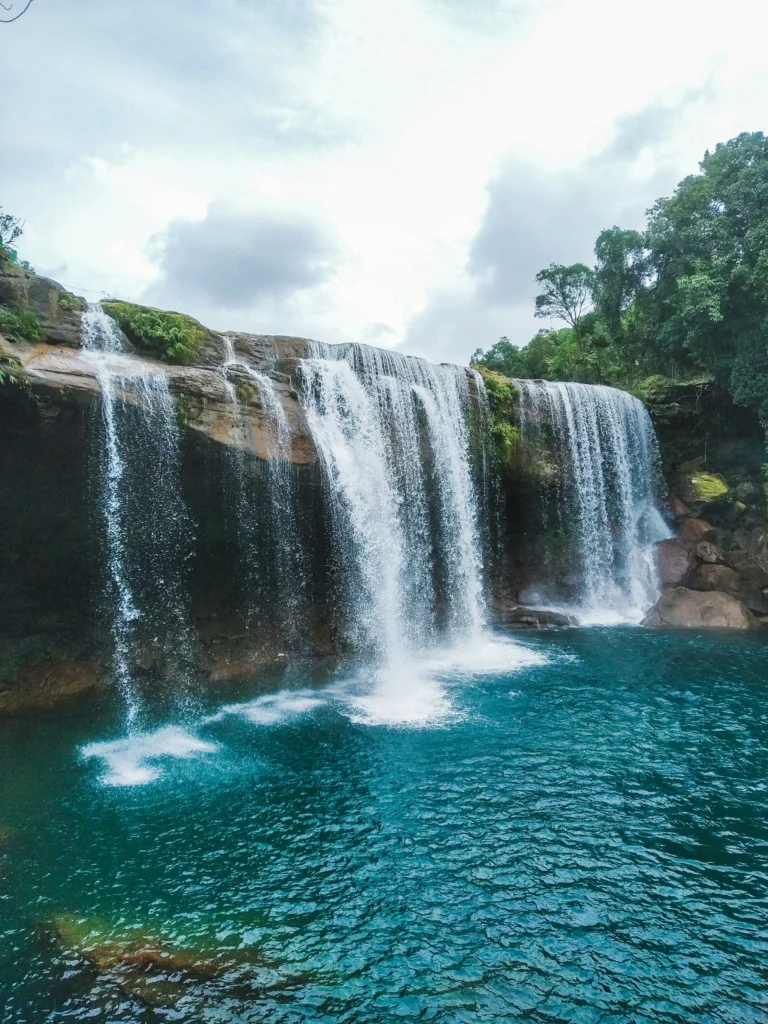
Let’s be brutally honest: In Meghalaya, it doesn’t just “rain.” It pours. There will be days when the mist is so thick you can’t see your own feet, let alone the Laitlum Canyons. Most tour operators will just tell you to wait it out in your room. At Tripsiana, we think that’s a waste of a holiday. A heavy downpour isn’t a “day off”—it’s just a change of venue. When the clouds close the doors to the viewpoints, Meghalaya opens up its underground secrets and indoor soul. Here is our official “Plan B” for when the weather refuses to cooperate. 1. Go Underground: The Caves are Always Dry When the sky is falling, head into the earth. Meghalaya has some of the longest and deepest cave systems in South Asia—and the best part? They don’t care about the rain. Plan B Spot: Arwah Cave or Mawsmai Cave in Sohra. Why it works: These caves are limestone fortresses. While it’s chaotic outside, inside it’s quiet, steady, and—most importantly—dry. You can spend an hour admiring fossils and stalactites without a single drop of rain hitting your head. 2. The “Museum Crawl” in Shillong Shillong is the cultural capital of the North East, and its museums are genuinely world-class. If the hills are grey, the indoor history is vivid. Plan B Spot: Don Bosco Museum. Why it works: This 7-story hexagonal marvel lets you explore the indigenous cultures of all eight North Eastern states. You can easily spend 3–4 hours here. By the time you reach the skywalk on the roof, the rain might have even cleared up for a freshly washed view of the city. 3. The “Slow Lunch” Strategy Meghalaya has a burgeoning café and slow-food culture. A rainy day is the perfect excuse to stop rushing and start tasting. Plan B Activity: A traditional Khasi meal in a local home or a long coffee session at Dylan’s Café. Why it works: There is nothing quite like the sound of rain on a tin roof while you’re tucked away with a steaming plate of Jadoh or a hot cup of Sha Saw (red tea). It’s the most hassle-free way to experience the local lifestyle. 4. Chase the “Heavy” Falls (From the Car) Some waterfalls actually look better when it’s pouring—and you don’t even have to hike to see them. Plan B Spot: Vah-Syiem Falls or the Seven Sisters Falls Viewpoint. Why it works: These are roadside marvels. Our drivers can park where you can witness the raw power of the monsoon right from your SUV window. You get the thrill of the “Big Water” without getting soaked to the bone. 5. Visit the “Rainman” in Mawsynram If it’s already pouring, why not go to the place that holds the world record for it? Plan B Activity: A drive to Mawsynram. Why it works: There’s a unique bragging right in being in the wettest place on earth during a heavy downpour. Visit Krem Puri (the world’s longest sandstone cave) or see the famous stalagmite Shivling at Mawjymbuin Cave. The Tripsiana “Weather-Flex” Policy We don’t stick to a rigid itinerary like a robot. Real-Time Swapping: If our local contacts tell us the canyons are blocked by fog, we immediately swap your “Trek Day” with a “Cave & Museum Day.” The Comfort Kit: Every Tripsiana vehicle comes equipped with extra umbrellas and high-quality rain ponchos—just in case you decide to brave the rain anyway. Don’t let the clouds cancel your trip. A little rain never hurt a great story. Let’s plan an itinerary that’s as flexible as the weather. [Explore our All-Weather Meghalaya Packages]
Winter in the Abode of Clouds: Why November is the Best-Kept Secret for Clear Skies
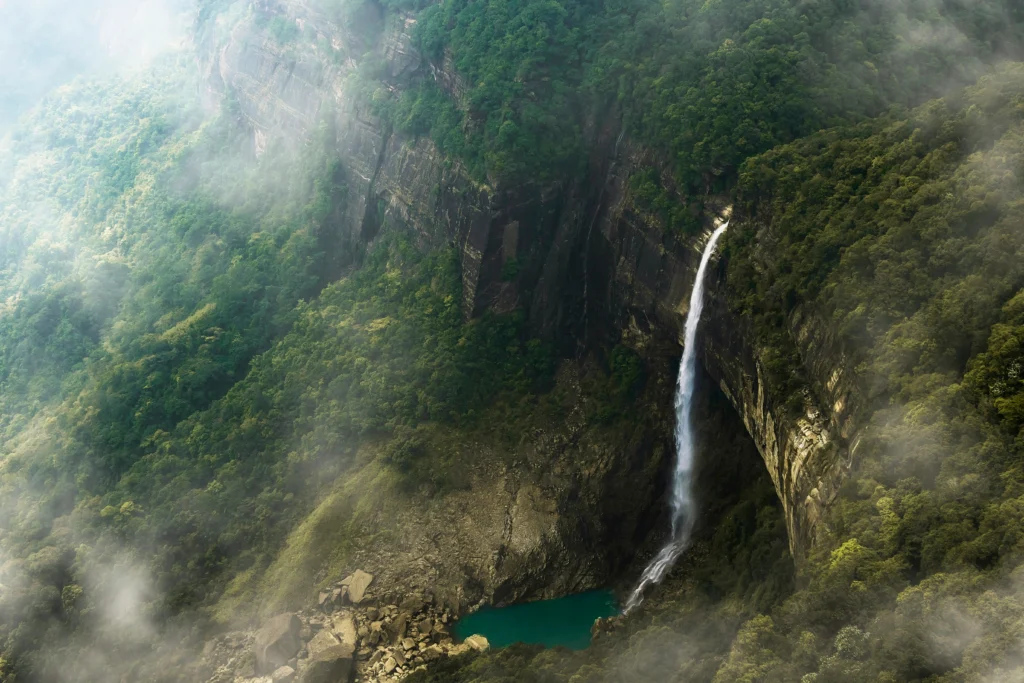
If you ask a travel agent when to visit Meghalaya, they’ll probably give you a generic “October to June” answer. If you ask a photographer or a local trekker, they’ll give you one specific month: November. While the world is busy rushing to the hills in the summer to escape the heat, the “Abode of Clouds” is often hiding behind a thick veil of mist. But come November, the curtain lifts. Let’s be real: If you want those endless canyon views and crystal-clear rivers you saw on Instagram, this is the only month that truly delivers. Here is why November is the best-kept secret of the North East. 1. The “HD” Visibility In the monsoon, you’re lucky if you can see fifty feet ahead. In November, the humidity drops to near zero. The Result: The air becomes incredibly sharp. From the Laitlum Canyons, you can see all the way into the emerald valleys of Bangladesh with terrifying clarity. The Photography Bonus: This is “Golden Hour” season. The winter sun stays lower in the sky, casting a warm, cinematic glow over the grass and cliffs all day long. 2. The Umngot River Turns Into Glass We’ve talked about the “Blue Water” calendar before, but November is the gold standard. The Science: By November, the last of the monsoon silt has settled. The river at Dawki and Shnongpdeng becomes so transparent it feels like you’re floating in a vacuum. The Experience: This is the best month for scuba diving and snorkeling in the river. You can see every pebble and fish on the riverbed from 20 feet above. 3. The Perfect Trekking Temperature Trekking to the Double Decker Root Bridge in June is a humid, sweaty ordeal. Doing it in November is a different game. The Weather: The days are cool and sunny (18–22°C), and the nights are crisp (8–12°C). The Comfort: You can hike the 3,500 steps without feeling like you’re in a sauna. Your grip on the stone steps is better because the moss has dried up, making the trails significantly safer for seniors and kids. 4. The Cherry Blossom Festival Most people think you need to go to Japan for cherry blossoms. They’re wrong. The Event: In mid-November, Shillong turns pink. The Himalayan Cherry Blossoms bloom across the city, especially around Ward’s Lake. The Vibe: The city hosts the Cherry Blossom Festival, featuring international music acts, local fashion, and street food. It’s the closest India gets to a surreal, pink winter wonderland. The “Brutal” Reality of Winter November isn’t perfect; it has its own set of rules: The Waterfalls Fade: While they are still beautiful, the waterfalls won’t have the “thunderous” power they have in August. They become elegant, thin veils of white. The 5:00 PM Blackout: The sun sets early in the North East. By 4:30 PM, it starts getting dark. Tripsiana Tip: We start our days at 7:30 AM in November to ensure you get 100% of the daylight. The Chill: Don’t let the sun fool you. Once it sets, the temperature in Shillong drops fast. You’ll need a proper jacket, not just a hoodie. Why Tripsiana in Winter? Winter travel in Meghalaya requires a different kind of logistics. The “Cozy” Stay: We prioritize homestays and hotels that offer room heaters and heavy blankets—things you won’t care about in May but will find life-saving in November. The Festival Access: We help our guests navigate the Cherry Blossom Festival crowds, booking central stays so you can walk to the venues instead of getting stuck in Shillong’s infamous traffic. Want to see the clouds from above? November is calling. Let’s plan a trip where the views actually match the postcards. [Check our November-Exclusive Cherry Blossom Itineraries]
The Rain Checklist: Why a Meghalaya Monsoon Trip is Actually Better (If You Pack Right)
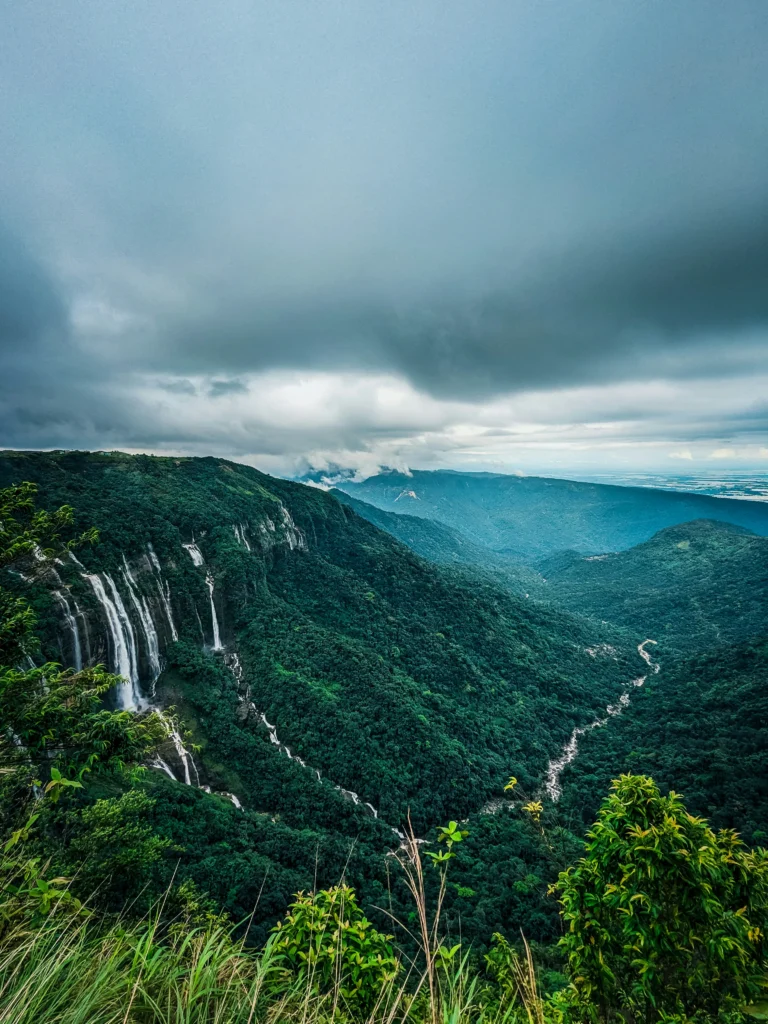
Let’s be brutally honest: If you hate getting wet, stay away from Meghalaya between June and September. During the monsoon, the “Abode of Clouds” doesn’t just have weather; it has an attitude. The rain is loud, relentless, and can turn a sunny afternoon into a white-out in seconds. So, why do the “pros” travel now? Because a dry Meghalaya is only half the story. In the monsoon, the hills turn a shade of neon green that doesn’t look real. The waterfalls—thousands of them—come to life, and the smell of the damp earth in the pine forests is better than any perfume. If you want to see the state in its most powerful form, you have to embrace the rain. But you have to do it smartly. Here is your survival checklist. Why the Monsoon is Secretly the “Prime” Season The Waterfalls are “Thumping”: Iconic falls like Nohkalikai and Wei Sawdong are mere trickles in the summer. In the monsoon, they are thunderous, mist-spraying giants. Zero Dust, Pure Air: The rain washes the atmosphere. Every photo you take will have a crispness and color saturation that you simply can’t get in the dry season. The “Cloud-Catcher” Effect: You aren’t just looking at clouds; you are inside them. Driving through the mist-covered roads of East Khasi Hills is a cinematic experience. The “Must-Pack” Monsoon List Do not rely on what you “usually” take for a rainy day in the city. The Meghalayan monsoon plays by different rules. 1. The “Goldcup” Boots (Or Serious Grip) Forget your expensive white sneakers. Within ten minutes on a forest trail, they will be brown. You need shoes with deep rubber lugs. Pro-Tip: Locals wear “Goldcup” gumboots—cheap, 100% waterproof, and high-grip. We can help you find a pair at a local market for less than ₹500. 2. A Poncho, Not Just an Umbrella An umbrella is useless when the wind starts whipping across the Laitlum Canyons. The Gear: Get a heavy-duty, knee-length trekking poncho. It covers you and your backpack, keeping your electronics dry while leaving your hands free for balance. 3. Quick-Dry Everything Jeans are your enemy in the monsoon. Once they get wet, they stay wet for three days due to the high humidity. The Gear: Pack polyester or nylon trekking pants and moisture-wicking t-shirts. They dry in hours, even in the shade. 4. The “Dry Bag” for Electronics Your “water-resistant” phone or camera isn’t built for 100% humidity. The Gear: A 10–20 liter Dry Bag (the kind used for kayaking) is a lifesaver. Throw your power bank, camera, and wallet in there before you head to a waterfall. The Brutal Reality Check While the monsoon is magical, it comes with “Hassles” that we at Tripsiana manage for you: Landslides: Roads can close unexpectedly.Our Solution: We keep our itineraries flexible and our drivers are locals who know the alternate backroads. Leeches: In the thick jungles of Nongriat, leeches come out to play in the rain.Our Solution: We provide “leech socks” and carry salt spray to keep them at bay. The “Grey-Out”: Sometimes the fog is so thick you can’t see five feet ahead.Our Solution: We don’t just sit in the car; we pivot to “indoor” experiences like exploring the Arwah Caves where the rain can’t reach you. Ready to dance in the rain? Most people wait for the sun. The smart ones head for the clouds. Let’s plan a monsoon escape that’s actually comfortable. [Explore our Monsoon-Special Meghalaya Packages]